
Conversational Copywriting: Writing Scripts That Sound Like You
Ditch the corporate speak and robotic delivery. Learn conversational copywriting techniques that make your scripts sound natural, authentic, and irresistibly engaging.
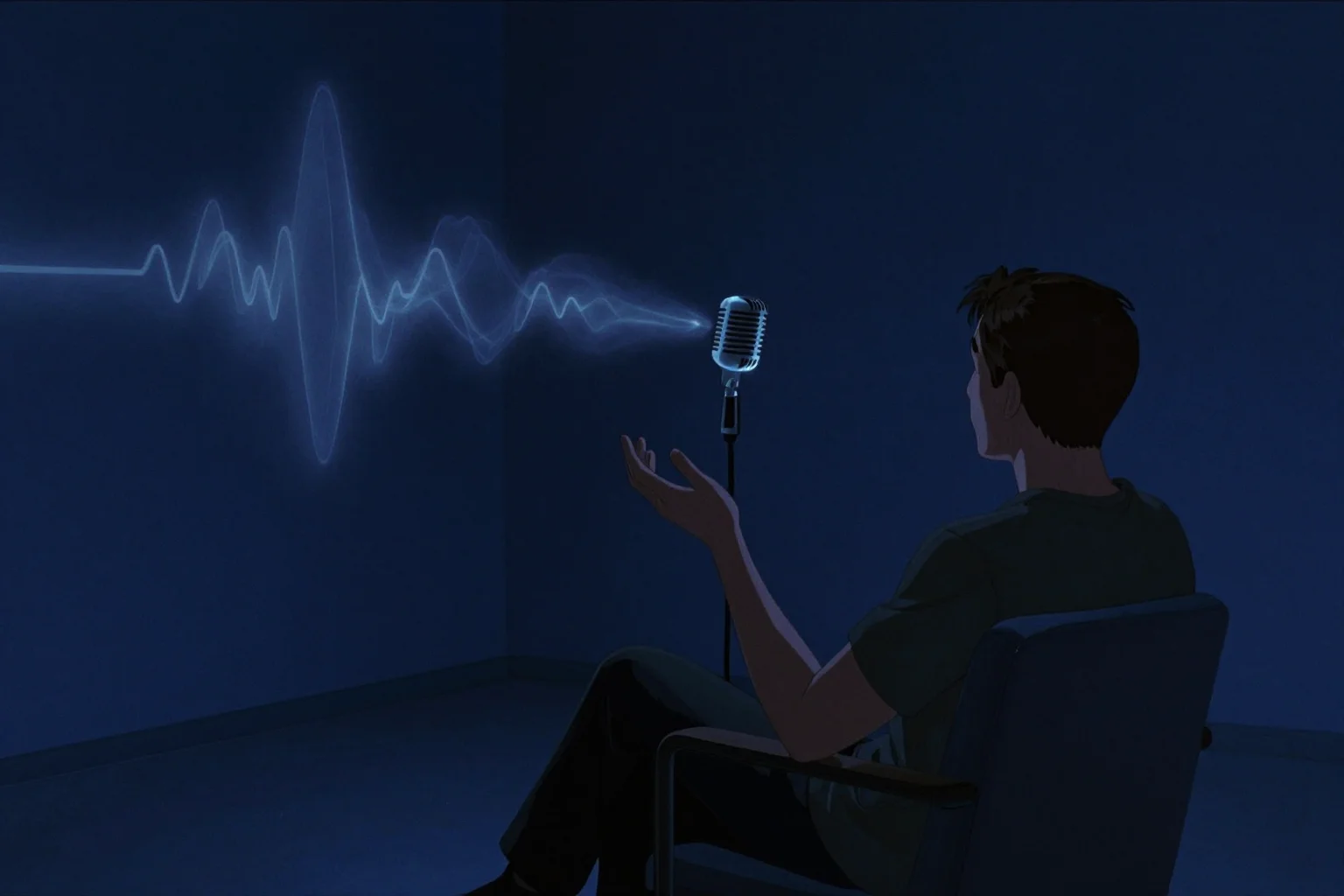
The biggest scripting mistake on YouTube isn’t bad information - it’s inauthentic delivery. Viewers can smell corporate speak, academic formality, and performative enthusiasm from the first sentence. The most successful creators write scripts that sound exactly like they talk, creating an intimate, conversational experience that builds parasocial relationships and sustained engagement. This comprehensive guide reveals the principles and techniques of conversational copywriting, showing you how to transform stiff, formal scripts into natural, engaging dialogue that feels like a friend explaining something fascinating over coffee.
Executive Summary
Conversational copywriting transforms scripts from lectures into dialogues. This guide covers the psychology of why conversational content outperforms formal content, specific techniques for writing naturally, common mistakes that kill authenticity, and frameworks for maintaining your unique voice while delivering structured information. You’ll learn how to write for the ear rather than the eye, how to use vocal variety markers in scripts, and how to balance preparation with spontaneity. By the end, you’ll have a complete system for writing scripts that sound authentically you while maximizing retention and connection.
First Principles: Why Conversational Content Wins
Before diving into techniques, we must understand why conversational content dominates YouTube.
The Parasocial Relationship
YouTube creates one-to-one intimacy at scale. Viewers don’t watch “content” - they watch “people.” The parasocial relationship - the illusion of friendship between creator and viewer - drives subscription, loyalty, and long-term engagement. Formal language destroys this illusion. Conversational language builds it.
When you write conversationally, you’re not “presenting information.” You’re “having a conversation.” This distinction is everything.
The Cognitive Fluency Advantage
Research in cognitive psychology reveals that familiar, simple language processes more easily than complex, formal language. When content feels easy to process, viewers attribute that ease to the content’s quality (fluency heuristic). Conversational content feels easier, so it feels better.
Formal language creates cognitive friction. Conversational language creates cognitive flow.
The Authenticity Detection System
Modern viewers have sophisticated authenticity detectors developed through thousands of hours of content consumption. They can instantly distinguish between:
- Genuine enthusiasm vs. performative excitement
- Natural speech vs. written-text-read-aloud
- Authentic personality vs. adopted persona
When viewers detect inauthenticity, trust evaporates. Trust is the foundation of every metric that matters.
The Attention Economy Reality
Attention is scarce. Viewers have infinite alternatives. Formal content signals “work” - something that requires effort. Conversational content signals “pleasure” - something enjoyable. In the attention economy, pleasure beats work every time.
The Ten Principles of Conversational Copywriting
These principles transform formal writing into natural speech.
Principle 1: Write for the Ear, Not the Eye
Written text and spoken language are different mediums. What works on paper often fails in speech.
Eye-Optimized (Bad for Scripts): “The implementation of strategic methodologies enables enhanced outcomes through systematic approaches to content creation and distribution.”
Ear-Optimized (Good for Scripts): “Here’s the thing - if you use the right system, everything gets easier. You create better content, you get more views, and you don’t burn out.”
How to Apply:
- Read every sentence aloud before finalizing
- If you stumble, rewrite
- If it sounds like a textbook, rewrite
- If you wouldn’t say it to a friend, don’t say it to camera
Principle 2: Use Contractions Relentlessly
Formal writing avoids contractions. Conversational speech uses them constantly. This is an easy win.
Formal: “Do not, cannot, will not, should not” Conversational: “Don’t, can’t, won’t, shouldn’t”
Exception: Occasionally using full forms for emphasis. “I will NOT give up” hits harder than “I won’t give up.”
Principle 3: Start Sentences with Conjunctions
Grammar rules say don’t start with “and,” “but,” or “so.” Conversational speech does this constantly.
Formal: “However, this approach has limitations. Furthermore, the data suggests…” Conversational: “But here’s the problem. And the data actually shows…”
Starting with conjunctions creates flow and signals that you’re continuing a thought rather than starting a new one.
Principle 4: Use Sentence Fragments Strategically
Complete sentences feel written. Fragments feel spoken.
Formal: “There are three primary reasons why this strategy is effective.” Conversational: “Three reasons why this works. First…”
Fragments create punch and variety. They break the monotony of complete sentence structures.
Principle 5: Ask Questions (Then Answer Them)
Questions engage the viewer mentally. They create mini-loops that demand resolution.
“So why does this work? Three reasons. First…” “But what if you’re just starting out? Here’s the thing…” “You might be wondering - is this even ethical? Great question…”
Questions create dialogue. They transform monologue into conversation.
Principle 6: Use You and I Abundantly
Formal content uses third person. Conversational content uses first and second person.
Formal: “One should consider the implications for creators.” Conversational: “You need to think about what this means for your channel.”
“You” and “I” create intimacy. They position the creator and viewer as real people in relationship.
Principle 7: Include Interjections and Filler Words (Strategically)
Pure, polished prose feels robotic. Strategic filler words create naturalism.
Natural: “So, um, here’s the thing… Actually, let me back up.” Too Polished: “Here is the important concept to understand.”
Strategic Use:
- “So” as a transition signal
- “You know” to create relatability
- “Actually” to correct or pivot
- “Look” or “Listen” to refocus attention
- Brief pauses (”…”) to create emphasis
Caution: Too many fillers undermine authority. Use them deliberately, not habitually.
Principle 8: Write in Active Voice
Passive voice creates distance. Active voice creates immediacy.
Passive: “The algorithm was changed by the platform.” Active: “The platform changed the algorithm.”
Passive: “Mistakes were made.” Active: “I made mistakes.”
Active voice is shorter, clearer, and more personal.
Principle 9: Use Specific, Concrete Language
Abstract language feels academic. Concrete language feels real.
Abstract: “This strategy improves engagement metrics.” Concrete: “This strategy got me from 200 views to 50,000 views in three months.”
Abstract: “Many creators struggle with consistency.” Concrete: “You’re posting twice a week, burning out, and your channel’s barely growing.”
Concrete language paints pictures. Pictures engage emotion. Emotion drives action.
Principle 10: Break the Rules When Authentic
These are guidelines, not laws. Your authentic voice might break some rules - and that’s fine.
If you’re naturally formal, don’t force casualness. If you love complex vocabulary, use it. Authenticity trumps optimization.
The goal isn’t to sound like everyone else. It’s to sound like the best version of you.
The Conversational Script Template
Here’s a practical template that integrates conversational principles into a complete script structure.
Opening (0-60 seconds): The Personal Hook
Pattern:
- Immediate personal connection
- Relatable problem or situation
- Stakes that feel real
- Promise delivered conversationally
Example: “So I was staring at my analytics last night at 2 AM - again - and I realized something. [pause] I’ve been scripting my videos all wrong. Like, completely backwards. And I think you might be too. See, I used to think good scripts meant sounding smart. Using big words. Being really… professional. But my retention was terrible. People were leaving in the first minute. So I flipped everything. I started writing how I actually talk. And my average view duration jumped from 28% to 64% in two months. In this video, I’m going to show you exactly how to write scripts that sound like you - so your viewers stick around and actually connect.”
Conversational Elements:
- “So” as transition
- Personal story immediately
- “[pause]” for vocal variety
- “Like” as verbal filler
- “I think” for hedging/relatability
- “See” to introduce explanation
- Specific numbers (authenticity markers)
- Direct address (“you”)
Body Section 1 (2-4 minutes): The Problem Explained
Pattern:
- Acknowledge the viewer’s experience
- Explain why the problem exists (conversationally)
- Share personal failure/realization
- Bridge to solution
Example: “Here’s the thing. You probably learned to write in school, right? Essays. Reports. Formal stuff. And that training… it sticks with us. So when we start YouTube, we write these scripts that sound like research papers. But here’s what I finally figured out. YouTube isn’t a classroom. It’s a conversation. You’re not presenting to a boardroom. You’re talking to one person. Just… you and them. And when you write like you’re giving a lecture, people check out. Because lectures feel like work. But conversations? Conversations feel like connection.”
Conversational Elements:
- “Here’s the thing” as verbal transition
- “Right?” as tag question
- ”…” for pause
- “So” to continue thought
- Rhetorical question
- “Finally figured out” for journey emphasis
- “Just” as minimizer
Body Section 2 (4-8 minutes): The Solution Revealed
Pattern:
- Introduce the approach conversationally
- Break it into simple steps
- Use examples and analogies
- Keep language accessible
Example: “So how do you actually do this? It’s simpler than you think. First, stop writing and start talking. Seriously. Open a voice recorder on your phone. Just… explain your video topic out loud. Don’t script it first. Just talk. Because when you talk, you naturally use contractions. You start sentences with ‘and’ and ‘but.’ You use ‘you’ and ‘I.’ All the stuff that makes content feel real. Then transcribe that recording. That’s your first draft. Not perfect, but authentic. Second - and this is huge - read everything out loud before you record. If you stumble over a word, if a sentence feels clunky, your viewers will feel that too. So fix it. Make it sound like something you’d actually say.”
Conversational Elements:
- “So” to start explanation
- “Seriously” for emphasis
- “Just” twice for simplicity
- “Because” explaining naturally
- “That’s” as demonstrative
- “And this is huge” for emphasis
- “So” as conjunction starter
- Commands delivered as friendly advice
Body Section 3 (8-12 minutes): Implementation Details
Pattern:
- Get specific and practical
- Use concrete examples
- Address edge cases conversationally
- Provide templates/frameworks
Example: “Let me give you a real example. Let’s say you’re doing a video about… I don’t know… budgeting for creators. The formal way would be: ‘Content creators must implement rigorous financial management practices to ensure sustainable operations.’ [pause] No one talks like that. The conversational way: ‘So you’re making money from YouTube now. Awesome. But here’s the thing - if you don’t get your finances straight, you’re going to lose half of it to taxes and mistakes. I learned this the hard way. My first $10,000 month? I spent $8,000 of it because I didn’t plan. Don’t be me.’ See the difference? Same information. Totally different impact.”
Conversational Elements:
- “Let me” for personal offer
- “I don’t know” for hesitation
- “No one” as absolute
- “So” as opener
- “Here’s the thing” as verbal tic
- “I learned this the hard way” for vulnerability
- “Don’t be me” as directive
- “See” as attention call
Closing (12-15 minutes): The Action Step
Pattern:
- Summarize conversationally (not academically)
- Connect to viewer’s next step
- Personal sign-off
- Natural call-to-action
Example: “Okay, so here’s what I want you to do. Take your next script - the one you’re working on right now - and read it out loud. If it sounds like you’re reading a textbook, rewrite it. Use contractions. Start some sentences with ‘but’ and ‘so.’ Talk to one person. Just… have a conversation. I promise you, your retention will improve. Your comments will get more personal. And you’ll actually enjoy scripting more because it’ll feel like you. Thanks for hanging out with me on this one. If this helped, hit that like button - it actually does help the channel. And I’ll see you in the next video where we’re diving into hooks that actually stop the scroll.”
Conversational Elements:
- “Okay” as transition
- “So” to continue
- “Right now” for immediacy
- “Just” for simplicity
- “I promise you” for personal guarantee
- “Thanks for hanging out” for relationship
- “Actually” as emphasis
- “We’re” for inclusion
Common Conversational Mistakes
Even with good intentions, creators make these errors.
Mistake 1: The Over-Correction
Going from formal to overly casual. “Yo what’s up fam let’s get lit with some scripting tips bruh.”
This feels just as inauthentic as formal language. Your conversational voice must still be you - just the you that talks to friends, not the you that gives TED talks.
Fix: Record yourself explaining your topic to a friend. Transcribe it. That’s your authentic baseline.
Mistake 2: The Fillers Overload
“So, um, like, you know, basically, um, what I mean is…”
Strategic fillers create naturalism. Excessive fillers undermine credibility and annoy viewers.
Fix: Write with minimal fillers. Add 2-3 per minute during performance. If you naturally use more, edit them out ruthlessly.
Mistake 3: The Contradiction Contradiction
Overusing contractions to the point of absurdity. “I can’tn’t believe you’d’ve thought that’d work.”
Fix: Use contractions naturally. Don’t force them into awkward constructions.
Mistake 4: The Question Flood
“Why does this matter? Well, what if I told you…? But how do you actually do it? And what about when…?”
Questions engage, but too many feel interrogative. Balance questions with statements.
Fix: Aim for 1-2 questions per minute maximum. Most content should be statements with occasional questions for emphasis.
Mistake 5: The Fragment Fragmentation
“Important. Three reasons. First one. Biggest mistake.”
Too many fragments feel staccato and hard to follow. Fragments need context to work.
Fix: Use fragments for punch and variety, but ensure most sentences are complete enough to be clear.
Mistake 6: The Abstraction Abomination
“This methodology leverages strategic frameworks to optimize content delivery mechanisms for enhanced audience engagement metrics.”
Even with conversational markers, abstract content kills connection.
Fix: Translate every abstract concept into concrete example. “Leverages strategic frameworks” becomes “uses this simple system.”
Niche-Specific Conversational Adaptations
Different content types require different conversational approaches.
Educational/Tutorial Content
Educational content often resists conversational style because it feels “unprofessional.” This is false.
Adaptation:
- Keep the information rigorous, but the delivery casual
- Use “we” when explaining processes (“Now we’re going to…”)
- Admit confusion: “This part confused me for months…”
- Use analogies relentlessly
- Self-deprecate about your learning journey
Example: “Okay, so this is where I got stuck for like three weeks. [laughs] I kept trying to force the algorithm to do what I wanted instead of working with how it actually operates. Total amateur move. But once I figured out this one pattern… everything clicked.”
Business/Finance Content
Business content often defaults to corporate speak. Resist this.
Adaptation:
- Use personal financial stories (with appropriate privacy)
- Admit money mistakes
- Use “you” to make it personal
- Avoid jargon unless you immediately translate it
- Get excited about concepts (“This is actually really cool…”)
Example: “So when I first looked at my taxes as a creator, I panicked. Legit panic. I owed $12,000 and had no idea where I was going to get it. That’s when I learned about quarterly estimated payments - the hard way. Let me save you that stress.”
Tech/Review Content
Tech content often gets bogged down in specs and features.
Adaptation:
- Frame reviews as personal experiences
- Use “I” statements about your testing
- Compare to everyday objects
- Admit when you don’t understand a feature
- Express genuine enthusiasm or disappointment
Example: “I’ve been using this laptop for three weeks now. And I have feelings about it. Good feelings, mostly. But also… one really annoying thing that almost made me return it. Let me break down the real experience, not just the specs.”
Story/Vlog Content
Story content naturally supports conversational style but can ramble.
Adaptation:
- Maintain narrative focus while staying casual
- Use present tense for immediacy (“So I’m walking down the street and…”)
- Include reactions in real-time
- Don’t over-edit natural speech
- Let personality shine through quirks
Example: “So it’s 6 AM, I’m at the airport, and I just realized I forgot my… [sigh]… my hard drive. The one with all the footage. In my apartment. Two hours away. And my flight leaves in 45 minutes. This is fine. Everything’s fine.”
The Authenticity Audit
Use this audit to check if your script sounds authentically conversational.
The Friend Test
Read your script to a friend (or imagine doing so). Do they:
- Look confused?
- Interrupt to ask for clarification?
- Say “what does that mean?”
- Seem bored?
If yes, your script is too formal or abstract. Rewrite.
The Recording Test
Record yourself delivering the script. Then:
- Listen without watching (focus on language)
- Note where you stumble or sound robotic
- Mark sentences that feel unnatural
- Rewrite those sections conversationally
The Transcription Test
Transcribe one of your actual conversations about your topic. Compare to your script:
- Does the script match your natural speech patterns?
- Where does it diverge?
- Is the divergence necessary or artificial?
Adjust the script toward your natural patterns.
AutonoLab: Conversational Script Enhancement
Writing authentically conversational scripts at scale requires support. AutonoLab provides systematic assistance.
AI Conversational Analysis
Upload your script, and AutonoLab analyzes:
- Formality score (Flesch Reading Ease, sentence structure)
- Conversational markers (contractions, interjections, fragments)
- Abstraction index (concrete vs. abstract language)
- Comparison to your natural speech patterns (if voice samples provided)
The system identifies formal passages and suggests conversational alternatives.
Natural Speech Integration
Record yourself explaining your topic naturally. AutonoLab:
- Transcribes the recording
- Identifies your natural conversational markers
- Suggests how to incorporate these into written scripts
- Creates a “voice profile” that guides future writing
This helps you capture your authentic conversational style systematically.
Conversational Template Library
Access templates that balance conversational style with structural needs:
- Opening hooks in conversational voice
- Transition phrases that sound natural
- Explanation frameworks that feel like dialogue
- Closing templates that maintain authenticity
These templates ensure you don’t sacrifice structure for conversational flow.
Readability Optimization
AutonoLab highlights:
- Long, complex sentences that need breaking
- Passive voice constructions
- Abstract language that needs concretizing
- Formal words that need simplifying
This technical support ensures your conversational intent translates to conversational execution.
The Conversational Script Development Process
Professional creators follow systematic approaches to conversational writing.
Phase 1: Voice Recording (30 minutes)
Don’t write first. Talk first.
- Set a timer for 30 minutes
- Hit record on your phone
- Explain your video topic as if talking to a friend
- Don’t script. Don’t plan. Just talk.
- Transcribe the recording
This transcript is your authentic baseline. It captures your natural vocabulary, sentence structure, and conversational patterns.
Phase 2: Structural Mapping (45 minutes)
Take your transcript and map it to your video structure:
- Identify where you naturally introduced the problem
- Note where you explained the solution
- Mark where you got excited or emphasized points
- Find the natural closing
This shows you where your conversational instincts align with structural needs - and where they diverge.
Phase 3: Script Drafting (90 minutes)
Write your script using the transcript as your voice guide:
- Use your natural vocabulary
- Maintain your sentence rhythms
- Add structure where the transcript was meandering
- Tighten where the transcript was rambling
- Keep your authentic enthusiasm and personality
Phase 4: Conversational Polish (60 minutes)
Apply conversational principles deliberately:
- Add contractions where missing
- Break long sentences
- Insert strategic questions
- Add interjections and fillers (sparingly)
- Ensure concrete language
- Read aloud and adjust for flow
Phase 5: Authenticity Verification (30 minutes)
Run the authenticity audit:
- Read to a friend or imagine their reaction
- Record yourself delivering it
- Compare to your natural speech transcript
- Adjust anything that feels performative or stiff
Checklist: Conversational Quality Assurance
Before finalizing your script, verify against this comprehensive checklist:
Language Patterns
- Contractions used throughout (90%+ of applicable instances)
- Sentences often start with conjunctions (and, but, so)
- Sentence fragments used strategically for punch
- Questions appear regularly (1-2 per minute)
- First and second person dominate (I, you, we)
- Interjections and fillers used strategically (2-3 per minute)
- Active voice preferred over passive
Content Quality
- Concrete language throughout (specific examples, not abstractions)
- Personal stories and experiences included
- Vulnerability and imperfection acknowledged
- Direct address to viewer (you)
- Relatable problems and situations described
- Jargon avoided or immediately translated
Authenticity Markers
- Script sounds like you when read aloud
- Energy and enthusiasm feel genuine, not performative
- Vocabulary matches your natural speech
- Sentence rhythms match your speaking patterns
- No corporate, academic, or formal language
- Personality quirks and style maintained
Flow and Engagement
- Transitions feel natural, not jarring
- Explanations feel like conversation, not lecture
- Pace varies appropriately (not monotone)
- Checkpoints maintain connection to viewer
- Closing feels personal and warm
Technical Elements
- Pause markers included ([pause], …)
- Vocal variety cues noted (emphasis, speed changes)
- Length appropriate for complexity (conversational ≠ rambling)
- Structure serves content, not dominates it
- Authenticity maintained within professional context
Conclusion: Your Voice is Your Superpower
In a platform with millions of creators, your unique voice is your only sustainable differentiation. Information is commoditized. Techniques can be copied. But your authentic conversational style? That’s irreplaceable.
Conversational copywriting isn’t about dumbing down content. It’s about making content accessible, engaging, and human. Smart people don’t need formal language to understand smart concepts. They need clear language that respects their intelligence while acknowledging their humanity.
The techniques in this guide are tools, not rules. Use them to amplify your natural voice, not replace it. If you’re naturally analytical, be analytical - but conversationally. If you’re naturally enthusiastic, be enthusiastic - but authentically. If you’re naturally dry and witty, embrace that - just ensure clarity.
Start today. Take your next script and apply the conversational principles. Read it aloud. Rewrite what sounds stiff. Add your natural transitions. Use your authentic vocabulary. Then record and see how it feels.
Measure the results. Track whether conversational scripts perform better for your audience. Iterate based on data. But never sacrifice your authentic voice for optimization - because in the long run, authenticity is the ultimate optimization.
Your viewers don’t want perfect. They want real. They want you.
Write like you talk. Talk like you care. Care about connecting.
That’s conversational copywriting. That’s how you build an audience that stays.