
Thumbnail Psychology: The Science of Visual Attention
Discover the psychological principles behind effective YouTube thumbnails. Learn how visual attention, cognitive bias, and design psychology can dramatically increase your click-through rates and views.
Executive Summary
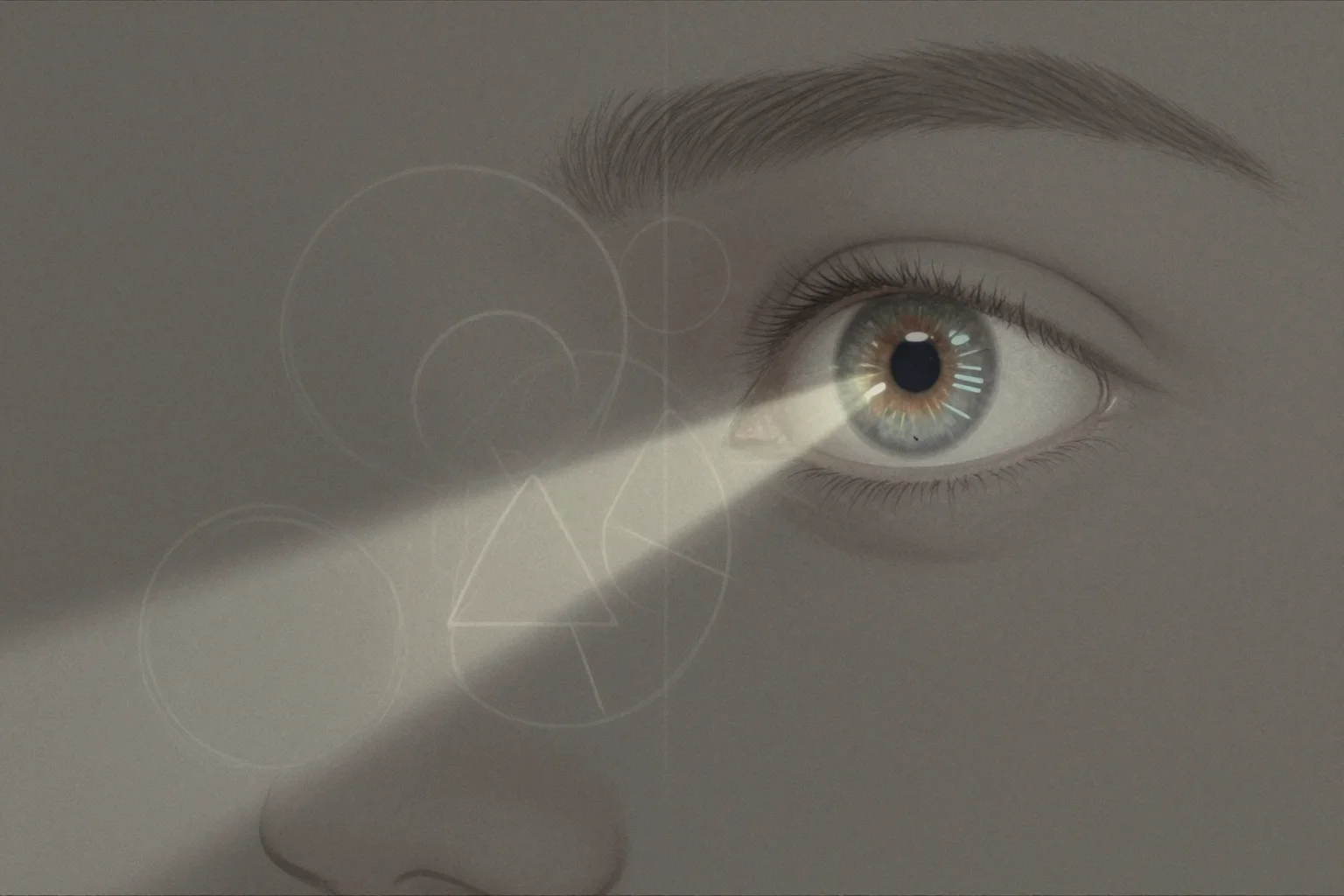
Your thumbnail is the single most important element determining whether someone clicks on your video. In a sea of content, it must capture attention in milliseconds, communicate value instantly, and overcome the psychological barriers that prevent clicks. This article reveals the science behind visual attention, exploring how human perception, cognitive psychology, and behavioral economics combine to create thumbnails that viewers simply cannot ignore. From understanding the neuroscience of attention to applying practical design principles, you’ll learn how to leverage psychology to create thumbnails that drive consistent, compounding growth for your YouTube channel.
First Principles: Understanding Visual Attention
Before diving into tactics, let’s understand the fundamental principles governing how humans process visual information:
The Brain’s Visual Processing Pipeline
Your brain processes visual information through a sophisticated hierarchy:
-
Pre-attentive Processing (50-150ms): Your thumbnail is assessed before conscious thought begins. Color, contrast, motion detection, and basic shapes are processed here.
-
Selective Attention (150-300ms): The brain decides whether to allocate focus. This is your make-or-break window.
-
Pattern Recognition (300-500ms): Viewers identify what they’re seeing and begin forming expectations.
-
Meaning Extraction (500ms+): Understanding and emotional response emerge.
Understanding this pipeline reveals why certain thumbnail elements work while others fail.
The Three-Second Decision Window
Research shows viewers make click decisions within 3 seconds of seeing a thumbnail. During this window, your thumbnail must:
- Interrupt the pattern: Break through the visual noise of competing content
- Create curiosity: Present information gaps the brain wants to fill
- Promise value: Clearly communicate what the viewer gains
- Reduce friction: Remove uncertainty about content quality
Cognitive Load Theory
The human brain seeks to minimize cognitive effort. Your thumbnail must deliver maximum impact with minimum processing required:
- Simplicity wins: Too many elements overwhelm and cause scroll-past behavior
- Familiarity attracts: Viewers gravitate toward recognizable patterns and faces
- Contrast captures: Elements that break expected patterns demand attention
The Neuroscience of Attention
The Reticular Activating System (RAS)
Your brain’s RAS acts as a filter, determining what deserves conscious attention. It responds to:
Novelty: Unexpected elements trigger the RAS to pay attention. This is why slightly unusual facial expressions, unexpected compositions, or surprising color combinations work.
Emotion: The RAS prioritizes emotional content. Fear, curiosity, excitement, and surprise all activate attention pathways.
Personal Relevance: Content that appears relevant to the viewer’s interests passes through the RAS filter.
Movement: Even implied motion (dynamic poses, directional lines) triggers attention because our ancestors needed to detect predators and prey.
The Role of the Amygdala
The amygdala processes emotional significance before conscious thought. Thumbnails that trigger emotional responses get prioritized processing:
- Fear and anxiety: “What if this happens to me?” thumbnails
- Curiosity gaps: Information that hints at knowledge to be gained
- Social proof: Faces showing emotional reactions we want to experience
- Reward anticipation: Promises of entertainment, education, or transformation
Pattern Interruption Psychology
The human brain is a prediction machine constantly building models of what to expect. Pattern interruption works by violating these expectations:
Predictive Coding Theory: Your brain generates predictions about what you’ll see. When reality differs, prediction error signals demand attention.
Examples of effective pattern interruption:
- A normally serious creator making a shocked face
- Mundane objects in extraordinary contexts
- Expected colors replaced with unexpected ones
- Clean, professional aesthetics in typically messy niches
Visual Hierarchy and Perceptual Organization
Gestalt Principles in Thumbnail Design
The Gestalt psychologists discovered how humans organize visual information. Apply these principles:
Proximity: Elements close together are perceived as related. Group related information.
Similarity: Similar elements are seen as belonging together. Use consistent styling for related concepts.
Continuity: The eye follows smooth paths. Use lines and gaze direction to guide attention.
Closure: The brain fills in missing information. Strategic cropping can increase intrigue.
Figure-Ground: Clear separation between subject and background is essential. Your main subject must pop.
Common Region: Elements within the same boundary belong together. Use backgrounds and containers strategically.
The Rule of Thirds and Golden Ratio
While these composition rules aren’t magic, they align with how human eyes naturally scan images:
Visual Weight Distribution: Place key elements where the eye naturally rests - typically the intersection points of the rule of thirds grid.
Reading Patterns: Western viewers scan in F and Z patterns. Position crucial information along these paths.
Center Bias: Despite the rule of thirds, the center still carries weight. Use it for your most important element when appropriate.
Color Psychology for Thumbnails
Color Temperature and Emotional Response
Colors trigger automatic emotional and physiological responses:
Warm Colors (Red, Orange, Yellow):
- Increase heart rate and create urgency
- Associate with excitement, danger, and passion
- Command immediate attention but can cause fatigue
- Best for: High-energy content, warnings, emotional reactions
Cool Colors (Blue, Green, Purple):
- Create calm and trust
- Associated with professionalism, nature, and stability
- Recede visually, creating depth
- Best for: Educational content, tutorials, trustworthy information
Neutral Colors (Black, White, Gray):
- Provide sophistication and contrast
- Act as visual anchors
- Can feel sterile if overused
- Best for: Backgrounds, text, professional aesthetics
Saturation and Attention
Highly saturated colors demand more attention but use them strategically:
- High saturation: Grabs attention but can feel cheap or overwhelming
- Strategic saturation: Use on key elements only, with more subdued surroundings
- Desaturated backgrounds: Allow saturated foreground elements to dominate
- Color harmony: Use complementary or analogous color schemes for professional results
The Psychology of Specific Colors
Red: Urgency, danger, passion, importance. Use sparingly for maximum impact.
Blue: Trust, calm, intelligence. Dominant in business and education niches.
Green: Growth, money, nature, go-ahead signals. Effective for finance and lifestyle content.
Yellow: Optimism, caution, attention. Excellent for highlighting and warnings.
Purple: Luxury, creativity, mystery. Works well for entertainment and lifestyle.
Orange: Enthusiasm, creativity, affordability. Friendly and approachable.
Black: Power, elegance, mystery. Creates contrast and sophistication.
White: Cleanliness, simplicity, space. Provides breathing room and clarity.
Facial Expression Psychology
The Universal Language of Faces
Humans are hardwired to read faces instantly. This evolutionary advantage makes faces powerful thumbnail elements:
Microexpressions: We detect subtle emotional cues in milliseconds. Genuine expressions outperform posed ones.
Eye Contact: Direct gaze creates connection and engagement. Viewers feel seen and addressed.
Emotional Contagion: We unconsciously mimic the emotions we see. A shocked face makes us curious; a laughing face promises entertainment.
High-Performing Facial Expressions
The Curiosity Gap: Slightly confused or intrigued expressions create information gaps viewers want to fill.
The Shocked Reaction: Wide eyes and open mouth signal something extraordinary has occurred.
The Genuine Smile: Duchenne smiles (involving eye muscles) convey authenticity and warmth.
The Determination Face: Intense focus suggests valuable knowledge or challenge ahead.
The Disgust/Shock Combo: Amplified reactions to extraordinary claims or results.
The Importance of Eyes
Eyes are attention magnets. Strategic eye placement can guide viewer focus:
- Large, bright eyes: Draw immediate attention and create connection
- Looking at the camera: Creates personal engagement
- Looking at the content: Directs attention to other thumbnail elements
- Exaggerated expressions: Amplify the emotional signal
Text Psychology: Words That Convert
Cognitive Fluency
The brain prefers easy-to-process information. Text in thumbnails should maximize cognitive fluency:
Short Words: Fewer syllables process faster. Use “huge” not “gargantuan.”
Common Vocabulary: Familiar words require less processing. Avoid jargon unless targeting experts.
Numerals Over Words: “7” processes faster than “seven.”
Active Voice: Creates momentum and engagement.
The Power of Specificity
Specific numbers and claims outperform vague promises:
- Specific numbers: “37 Tips” outperforms “Best Tips”
- Concrete outcomes: “$10,000/Month” beats “Make Money Online”
- Time frames: “In 30 Days” creates urgency and achievability
- Quantified results: “3x Your Views” promises transformation
Curiosity Gaps in Text
Text should open loops the viewer wants to close:
- Questions: “Why do 90% of channels fail?”
- Information gaps: “The strategy they don’t want you to know”
- Contradictions: “I was wrong about YouTube”
- Unexpected claims: “This changes everything”
The Psychology of Composition
Visual Weight and Balance
Different elements carry different psychological weight:
Heavy Elements:
- Large faces
- Bright colors
- High contrast
- Text with strong meaning
Light Elements:
- Small objects
- Muted colors
- Blurry backgrounds
- Decorative elements
Balance these weights to create compositions that feel stable yet dynamic.
The Psychology of Space
Negative Space: Breathing room creates focus and sophistication. Don’t overcrowd.
Cropping: Strategic cropping creates intrigue and focuses attention. The brain fills in missing information.
Scale: Dramatic size differences create hierarchy and drama.
Depth: Layers and perspective create visual interest and guide the eye.
Directional Psychology
Leading Lines: Natural lines in the composition guide the eye to focal points.
Gaze Direction: If your face looks left, viewers look left. Place important content accordingly.
Motion Implication: Dynamic poses and diagonal lines suggest action and energy.
Rule of Odds: Odd numbers of elements feel more natural and dynamic than even numbers.
Cognitive Biases and Thumbnail Success
The Von Restorff Effect (Isolation Effect)
Items that stand out from their surroundings are more likely to be remembered. Apply this by:
- Making your thumbnail visually distinct from competitors
- Using unique color schemes for your niche
- Creating signature elements that viewers recognize instantly
- Breaking patterns in unexpected but appealing ways
The Mere Exposure Effect
People prefer familiar things. Balance novelty with familiarity:
- Use faces viewers recognize (your own consistently)
- Maintain some consistent elements across thumbnails
- Create a signature style that becomes familiar over time
- Reference popular formats but add your unique twist
Social Proof and FOMO
Implied Social Proof: Show reactions that suggest others have already engaged.
Scarcity: “Limited time” or countdown elements create urgency.
Exclusivity: “Secret” or “hidden” suggests privileged information.
Trending: Visual cues that something is popular or viral.
Authority and Trust Signals
Professional Quality: High-resolution images signal credibility.
Branding Consistency: Recognizable elements build trust over time.
Credential Implication: Visual cues suggesting expertise (professional settings, equipment, results).
Transparency: Clear, honest representation reduces clickbait backlash.
The Psychology of Click Decisions
Cost-Benefit Analysis
Viewers unconsciously weigh:
Perceived Costs:
- Time investment (video length)
- Cognitive effort (complexity)
- Opportunity cost (what else could I watch?)
- Risk of disappointment (clickbait potential)
Perceived Benefits:
- Entertainment value
- Educational gain
- Emotional payoff
- Social currency (content worth sharing)
Your thumbnail must maximize perceived benefits while minimizing perceived costs.
Reducing Friction
Clear Value Proposition: Viewers immediately understand what they get.
Quality Assurance: Professional appearance suggests high production value.
Specificity: Concrete promises feel more trustworthy than vague claims.
Relevance: Clear targeting ensures the right viewers click.
Creating Irresistible Curiosity
The Information Gap Theory: When we notice a gap between what we know and what we want to know, we experience curiosity.
Effective Gap Creation:
- Show results without revealing the method
- Present a problem without the solution visible
- Display a transformation without the process
- Feature something unusual without explanation
Platform-Specific Psychology
YouTube’s Interface Psychology
The Small Screen Reality: Most viewers see thumbnails on mobile devices or as small desktop previews.
Text Legibility: Small text must be readable at 154x86 pixels.
Contrast Requirements: Elements must pop against YouTube’s white and dark mode backgrounds.
Competitive Context: Your thumbnail appears alongside 2-3 others. Differentiation is crucial.
Homepage vs. Suggested vs. Search
Homepage: Pattern interruption and broad appeal win. Viewers are browsing.
Suggested Videos: Consistency and recognition matter. Related content feels safe.
Search Results: Relevance and specificity dominate. Viewers have specific intent.
Subscription Feed: Familiarity and relationship drive clicks. Known creators have advantage.
Testing and Optimization Psychology
A/B Testing Fundamentals
Hypothesis Formation: Test based on psychological principles, not random changes.
Statistical Significance: Ensure sample sizes are large enough for valid conclusions.
Isolated Variables: Change one psychological element at a time.
Platform Tools: Use YouTube’s native testing features or third-party solutions.
AutonoLab’s Thumbnail Intelligence Platform
Managing the psychological complexity of thumbnails requires sophisticated analysis. AutonoLab provides creators with:
- AI-powered attention heatmaps showing where viewers’ eyes go first
- Emotional impact scoring based on facial expressions and composition
- Competitive analysis revealing psychological patterns in your niche
- Predictive performance modeling using machine learning trained on millions of thumbnails
- Color psychology optimization suggesting palettes for specific emotional responses
- Iterative testing frameworks that systematically improve performance
With AutonoLab, you’re not guessing what works psychologically - you have data-driven insights into human attention and decision-making.
Advanced Psychological Strategies
The Priming Effect
Elements in your thumbnail can prime viewers to interpret your content in specific ways:
Visual Priming: Colors and imagery activate associated concepts Emotional Priming: Expressions set the tone for content expectations Conceptual Priming: Visual metaphors prepare viewers for specific topics
Schema Theory Application
Viewers interpret thumbnails through mental frameworks (schemas):
Activate Relevant Schemas: Visual cues that trigger appropriate mental categories Challenge Schemas Strategically: Unexpected combinations create intrigue Leverage Existing Schemas: Build on familiar formats for faster processing
The Peak-End Rule
While primarily a content principle, this affects thumbnails too:
Promise a peak moment in your thumbnail (the most intense point), and viewers will anticipate the entire experience based on that promise.
Practical Implementation Framework
The P.R.I.M.E. Thumbnail Method
P - Pattern Interrupt: Break expectations immediately R - Relevance Signal: Show this is for the target viewer I - Interest Trigger: Create curiosity or emotional response M - Message Clarity: Clear value proposition within 2 seconds E - Emotional Resonance: Connect on a human level
Pre-Upload Checklist
Before publishing, verify your thumbnail:
- Passes the 3-second test: Meaning clear instantly?
- Readable at 154x86 pixel size (YouTube small thumbnail)
- High contrast between subject and background
- Emotional expression or element present
- Curiosity gap or clear value proposition
- Consistent with channel branding
- Stands out from typical niche thumbnails
- Mobile-friendly (test on phone screen)
- Text legible and necessary (minimal)
- File size under 2MB (for fast loading)
Iteration Protocol
Week 1: Launch with psychologically-informed thumbnail Week 2: Monitor CTR and watch time Week 3: If CTR < 4%, analyze against competitor thumbnails Week 4: Test variations addressing identified weaknesses Monthly: Review top performers for psychological patterns
Common Psychological Mistakes
Overcrowding
The Mistake: Too many elements competing for attention The Psychology: Cognitive overload causes immediate rejection The Solution: Ruthless elimination; one clear focal point
Ambiguity
The Mistake: Unclear what the video offers The Psychology: Uncertainty increases perceived risk The Solution: Concrete, specific visual promises
Exaggeration Backlash
The Mistake: Promises that content can’t deliver The Psychology: Disappointment creates negative associations The Solution: Honest representation of peak moments
Mimicry Without Differentiation
The Mistake: Copying successful thumbnails exactly The Psychology: Fails to trigger pattern interruption The Solution: Learn principles, create unique executions
Measuring Psychological Impact
Key Metrics
Click-Through Rate (CTR): Direct measure of attention capture success Average View Duration: Indicates promise-to-content alignment Audience Retention: Shows if psychology matched content quality Conversion to Subscribers: Measures brand-building effectiveness Comments and Engagement: Reveals emotional connection strength
Feedback Loops
Qualitative Analysis: Read comments for psychological reactions Comparative Analysis: Track performance against similar videos Temporal Analysis: Monitor how psychology performs over time Demographic Analysis: Check if psychology resonates with target audience
The Future of Thumbnail Psychology
Emerging Trends
Personalization: Thumbnails adapting to viewer preferences Dynamic Elements: Subtle motion and interactivity AI-Generated Optimization: Machine learning perfecting psychological elements Cross-Platform Psychology: Understanding different platform behaviors Accessibility Psychology: Designing for diverse cognitive processing
Ethical Considerations
Manipulative vs. Persuasive: Using psychology ethically to deliver real value Transparency: Honest representation builds long-term trust Addiction Awareness: Creating engagement without exploiting psychological vulnerabilities Inclusivity: Psychology that works across cultures and cognitive differences
Conclusion
Thumbnail psychology isn’t about manipulation - it’s about effective communication in an attention-scarce environment. By understanding how the human brain processes visual information, you can create thumbnails that:
- Respect viewers’ time by communicating value quickly
- Deliver on promises made, building trust and loyalty
- Stand out authentically in crowded feeds
- Create genuine curiosity about valuable content
The science is clear: attention follows predictable psychological patterns. Master these patterns, and you’ll consistently create thumbnails that drive the clicks, views, and growth your content deserves.
Remember, great thumbnail psychology serves the viewer by making it easy to discover content they’ll genuinely enjoy. Combine these principles with authentic, valuable content, and you build not just a channel, but a lasting relationship with your audience.
The most successful creators don’t rely on tricks or hacks. They understand the psychology of attention and use it to connect great content with the people who need it most. Start applying these principles today, measure your results, and watch as your thumbnails transform from overlooked to irresistible.